four stacks of gold coins

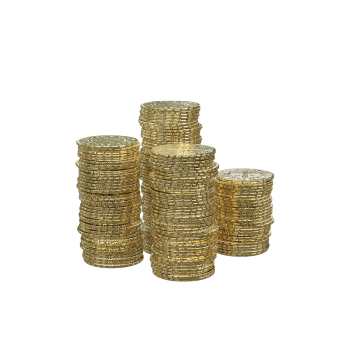
four stacks of gold coins
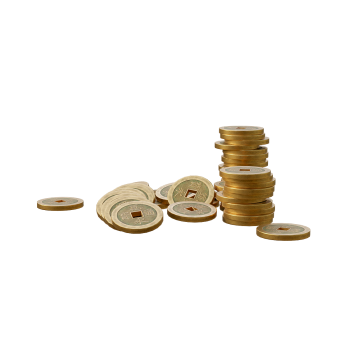
A pile of old Japanese coins known as "Kan'ei Tongbao"

A pile of old Japanese coins known as "Kan'ei Tongbao"

It is an important currency in the early Edo period of Japan (1603-1868), named after the era name "Kan'ei" at that time. This type of coin was first minted in the third year of Kan'ei (1626) by the Tokugawa shogunate in order to standardize the monetary system and maintain sufficient supply of copper coins. The casting of Kan'ei Toho marks an important period in the history of Japanese currency, with a huge amount of casting, a long casting time span, numerous versions, and materials including copper, iron, etc. Over time, the Kan'ei Tongbao gradually withdrew from circulation, but it held an important position in the currency history of Japan and even East Asia.
Greek King Heraeus Drachma Silver Coin

Greek King Heraeus Drachma Silver Coin

The drachma silver coin of King Heraeus of ancient Greece, a half crown bust of King Heraeus from around 40 BC to AD 0, with the left hand holding a long scepter. Drachma is the most commonly used large denomination coin, typically made of silver. The weight of the coin is about 17 grams and the diameter is about 24 millimeters.
In 1928, during the Soviet era, the currency was 0.5 kobi

In 1928, during the Soviet era, the currency was 0.5 kobi

The smallest denomination Goby coin issued by the Soviet Union. 1 ruble equals 100 kobi. The denominations of banknotes are 5, 10, 50, 100, 200, 500, 1000, 2000, 5000 rubles, and there are also 50, 10, 5, and 1 kobi coins. Face value: 0.5. Year of Issue: 1991. Material: Copper nickel alloy.
In 1991, the currency of the Soviet Union was 5 kopecies

In 1991, the currency of the Soviet Union was 5 kopecies

The last Goby coin issued by the Soviet Union. 1 ruble equals 100 kobi. The denominations of banknotes are 5, 10, 50, 100, 200, 500, 1000, 2000, 5000 rubles, and there are also 50, 10, 5, and 1 kobi coins. Face value: 15. Year of Issue: 1991. Material: Bronze.
During the 1920s, the Soviet currency was 1 ruble

During the 1920s, the Soviet currency was 1 ruble

Ruble, also known as Russian ruble, symbol: ₽. Currency code: RUB. Usage areas: Russia and self declared independent Abkhazia and South Ossetia. Inflation rate: 7%. The Russian ruble is the base currency unit of Russia. The subsidiary currency is Gobi. 1 ruble equals 100 kobi. The denominations of banknotes are 5, 10, 50, 100, 200, 500, 1000, 2000, 5000 rubles, and there are also 50, 10, 5, and 1 kobi coins. Denomination: 1. Year of Issue: 1920. Material: Silver 500/1000.
In 1922, the Soviet currency was 1 ruble

In 1922, the Soviet currency was 1 ruble

Ruble, also known as Russian ruble, symbol: ₽. Currency code: RUB. Usage areas: Russia and self declared independent Abkhazia and South Ossetia. Inflation rate: 7%. The Russian ruble is the base currency unit of Russia. The subsidiary currency is Gobi. 1 ruble equals 100 kobi. The denominations of banknotes are 5, 10, 50, 100, 200, 500, 1000, 2000, 5000 rubles, and there are also 50, 10, 5, and 1 kobi coins. Denomination: 1. Year of Issue: 1922. Material: Silver 500/1000.
The 50 Sentesimo silver coin issued by Uruguay in 1869

The 50 Sentesimo silver coin issued by Uruguay in 1869

The denomination is 50 Sentesimo, the coin weighs 12.5 grams, and the diameter is 33 millimeters. There are nine stars below the coat of arms, four leaves on the top of a wide wreath, and two leaves on the top of a normal sized wreath. Inscribed on the front: LA UNION HACE LA FURZA
The currency issued by Paraguay in 1869 was the 2 Real silver coin

The currency issued by Paraguay in 1869 was the 2 Real silver coin

The currency issued by England in 1793 was 1 penny for George III

The currency issued by England in 1793 was 1 penny for George III

On the front, there is a half body portrait of King George III with the inscription "GEORGIVS III · D · G · REX" facing to the right. Reverse printed with sailboat, land on the right horizon, Bermuda on top, engraved with: BERMUDA1793. Made of copper nickel alloy.
1907 Saint Gaudens $20 gold coin

1907 Saint Gaudens $20 gold coin

The Saint Gaudens $20 coin was produced by the United States Mint from 1907 to 1933. This gold coin is named after Augustus Saint Gaudens, who designed it. This coin is undoubtedly one of the most popular and beautiful coins in the United States. The $20 gold coin is a coin that is highly valued by investors and numismatists, and is almost loved by anyone who manages to obtain gold coins. For collectors, finding a well preserved 1907 Saint Gaudens $20 gold coin has always been a goal, but it is not an easy one to achieve.
In 1941, the Soviet currency was 3 kopecies
In 1941, the Soviet currency was 3 kopecies

Ruble, also known as Russian ruble, symbol: ₽. Currency code: RUB. Usage areas: Russia and self declared independent Abkhazia and South Ossetia. Inflation rate: 7%. The Russian ruble is the base currency unit of Russia. The subsidiary currency is Gobi. 1 ruble equals 100 kobi. The denominations of banknotes include 5, 10, 50, 100, 200, 500, 1000, 2000, 5000 rubles, as well as 50, 10, 5, 3, and 1 kobi coins. Face value: 3. Release year: 1941. Material: Copper.
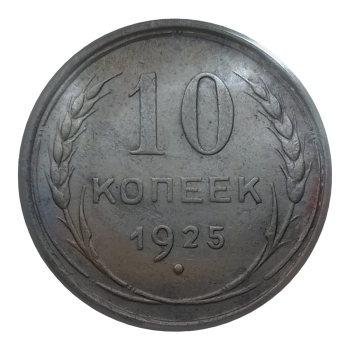
During the 1925 period, the Soviet currency was 10 kopecies

During the 1925 period, the Soviet currency was 10 kopecies

Ruble, also known as Russian ruble, symbol: ₽. Currency code: RUB. Usage areas: Russia and self declared independent Abkhazia and South Ossetia. Inflation rate: 7%. The Russian ruble is the base currency unit of Russia. The subsidiary currency is Gobi. 1 ruble equals 100 kobi. The denominations of banknotes are 5, 10, 50, 100, 200, 500, 1000, 2000, 5000 rubles, and there are also 50, 10, 5, and 1 kobi coins. Face value: 10. Release year: 19295. Material: Silver 500/1000.
Gold coin of King Bactria Eucratis I in ancient Greece

Gold coin of King Bactria Eucratis I in ancient Greece

The coin of the Bactrian king, Eucratis I (c. 171-145 BC) - The Greek Bactrian king who overthrew the House of Eusidmedes and conquered all their property, including Indian property. He misappropriated the title of King of Kings, possibly because not only the rulers of various regions of the Greco Bactrian country obeyed him, but also the local kings of India and other regions of the country obeyed him.
During the period of 1929, the Soviet currency was 15 kopecies

During the period of 1929, the Soviet currency was 15 kopecies

Ruble, also known as Russian ruble, symbol: ₽. Currency code: RUB. Usage areas: Russia and self declared independent Abkhazia and South Ossetia. Inflation rate: 7%. The Russian ruble is the base currency unit of Russia. The subsidiary currency is Gobi. 1 ruble equals 100 kobi. The denominations of banknotes are 5, 10, 50, 100, 200, 500, 1000, 2000, 5000 rubles, and there are also 50, 10, 5, and 1 kobi coins. Face value: 15. Year of Issue: 1929. Material: Silver 500/1000.
In 1921, the Soviet currency was 15 kopecies

In 1921, the Soviet currency was 15 kopecies

Ruble, also known as Russian ruble, symbol: ₽. Currency code: RUB. Usage areas: Russia and self declared independent Abkhazia and South Ossetia. Inflation rate: 7%. The Russian ruble is the base currency unit of Russia. The subsidiary currency is Gobi. 1 ruble equals 100 kobi. The denominations of banknotes are 5, 10, 50, 100, 200, 500, 1000, 2000, 5000 rubles, and there are also 50, 10, 5, and 1 kobi coins. Face value: 15. Year of Issue: 1921. Material: Silver 500/1000.
The currency of the Romanov dynasty in Russia, the Emperor Nicholas II silver coin
The currency of the Romanov dynasty in Russia, the Emperor Nicholas II silver coin

Ruble, also known as Russian ruble, symbol: ₽. Currency code: RUB. Usage areas: Russia and self declared independent Abkhazia and South Ossetia. Inflation rate: 7%. The Russian ruble is the base currency unit of Russia. The subsidiary currency is kobi, 1 ruble equals 100 kobi. The currency unit is the ruble. The denomination is 1 ruble, issued in 1897, made of silver material, with a diameter of 33.65 millimeters. A total of 26000000 items were issued.
In 1833, Bolivia issued a 10 cent coin
In 1833, Bolivia issued a 10 cent coin

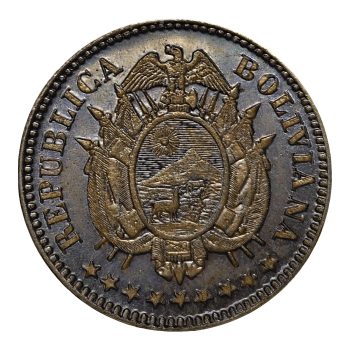
Boliviano is the circulating currency of Bolivia. The unit of subsidiary currency is cents, 1 Boliviano=100 cents. Boliviano was also the name of the currency in circulation in Bolivia from 1833 to 1963. The year of issuance is 1883. The material is copper nickel alloy. The front bears a flag and weapon crossed behind a bald eagle, with an oval shaped arm at the top and stars at the bottom. The reverse side features a treasure trove and fascia on both sides of a star shape. The text on the front: REPUBLICA BOLIVIANA. The text on the back is: LA UNION ES LA FURZA.
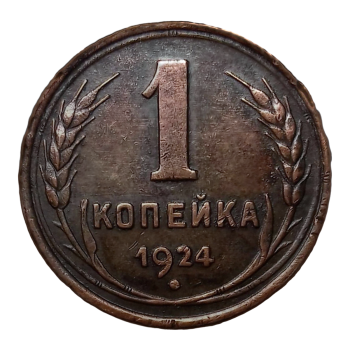
1 kobi of Soviet currency during the 1924 period

1 kobi of Soviet currency during the 1924 period

Ruble, also known as Russian ruble, symbol: ₽. Currency code: RUB. Usage areas: Russia and self declared independent Abkhazia and South Ossetia. Inflation rate: 7%. The Russian ruble is the base currency unit of Russia. The subsidiary currency is Gobi. 1 ruble equals 100 kobi. The denominations of banknotes are 5, 10, 50, 100, 200, 500, 1000, 2000, 5000 rubles, and there are also 50, 10, 5, and 1 kobi coins.
Greek King Heraeus IV Drachma Silver Coin

Greek King Heraeus IV Drachma Silver Coin

The drachma silver coin of King Heraeus of ancient Greece, a half crown bust of King Heraeus from around 40 BC to AD 0, with the left hand holding a long scepter. Drachma is the most commonly used large denomination coin, typically made of silver. The weight of the coin is about 17 grams and the diameter is about 24 millimeters.
The circulating currency of the ancient Greek Macedonian period was the Macedonian Shield and Silver Coin
The circulating currency of the ancient Greek Macedonian period was the Macedonian Shield and Silver Coin

This silver coin was minted in the city of Amphipolis in Macedonia under Roman control. The diameter of this silver coin is 3.3 centimeters. Artemis is a hunting goddess in Greek mythology, whose image is embedded in a delicate Macedonian shield. On the reverse side is a stick, surrounded by a wreath, with a line of inscriptions indicating that this coin belongs to the first region of the Roman vassal state. This Macedonian shield silver coin is in the collection of the Minneapolis Museum of Art.
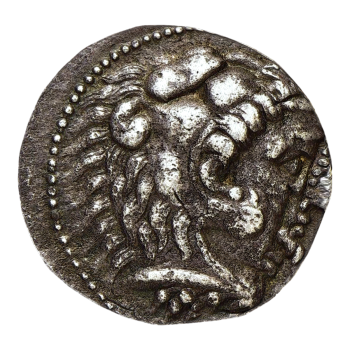
The currency of the classical period in ancient Greece, the drachma silver coin

The currency of the classical period in ancient Greece, the drachma silver coin

The obverse of this coin features the portrait of a young Hercules wearing a lion skin helmet. Hercules is a hero in Greek mythology known for his strength and courage. On this coin, he is depicted as a young man wearing lion skin, which is his emblem. Coins are made of silver. In ancient times, the ten drachma was the most commonly used large denomination coin, usually made of silver. The weight of the coin is about 17 grams and the diameter is about 24 millimeters.
The Ten Drachma Silver Coin, a currency from the classical period of ancient Greece

The Ten Drachma Silver Coin, a currency from the classical period of ancient Greece

The obverse of this coin features the portrait of a young Hercules wearing a lion skin helmet. Hercules is a hero in Greek mythology known for his strength and courage. On this coin, he is depicted as a young man wearing lion skin, which is his emblem. Coins are made of silver. In ancient times, the ten drachma was the most commonly used large denomination coin, usually made of silver. The weight of the coin is about 17 grams and the diameter is about 24 millimeters.
The tetradrachma silver coin, a currency from the classical period of ancient Greece

The tetradrachma silver coin, a currency from the classical period of ancient Greece

The obverse of this coin features the portrait of a young Hercules wearing a lion skin helmet. Hercules is a hero in Greek mythology known for his strength and courage. On this coin, he is depicted as a young man wearing lion skin, which is his emblem. Coins are made of silver. In ancient times, the tetradrachma was the most commonly used large denomination coin, usually made of silver. The weight of the coin is about 17 grams and the diameter is about 24 millimeters.
1 2 3 Next